
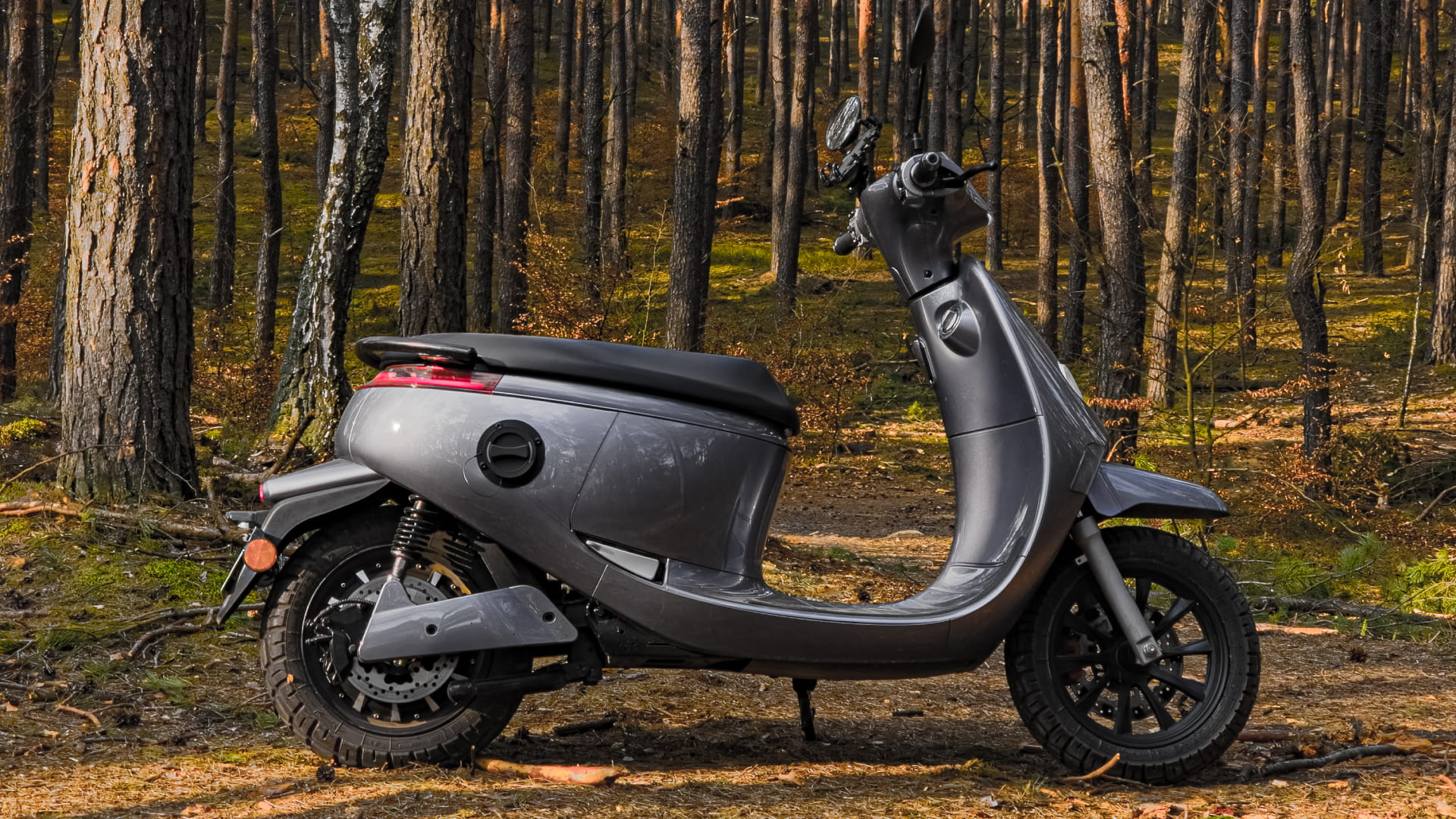
The debate between mid-drive motors and hub motors has been a cornerstone of the electronic scooter and EV industry for years. Most manufacturers focus their marketing on torque curves, unsprung weight, or center of gravity. However, at PEM (Pearl Electric Motors), we believe the most critical part of the conversation is being ignored: mechanical safety and long-term reliability.
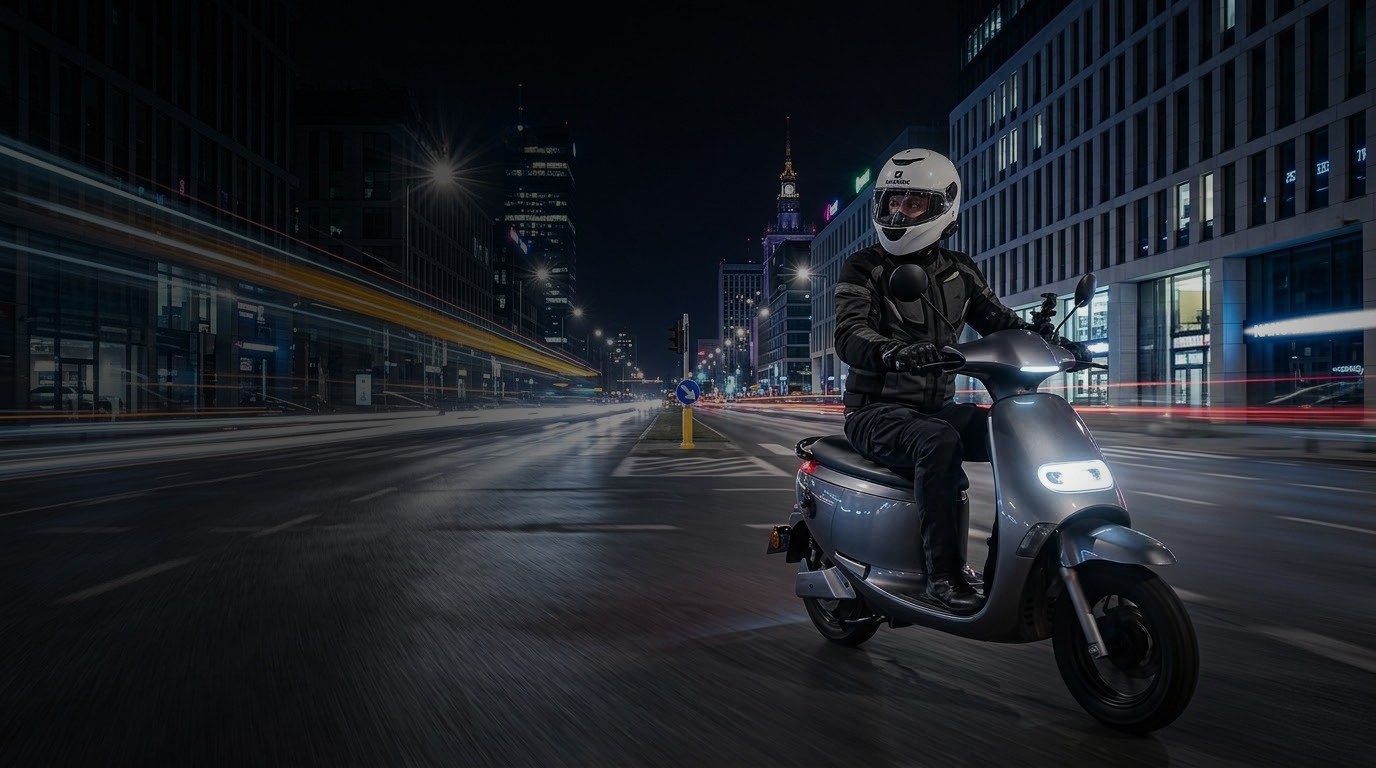
For a professional urban commuter, an electronic scooter is more than just a gadget; it is a tool for daily survival in dense city traffic. When we designed the PEM Monolith, our engineering team made a conscious decision to move away from traditional mechanical linkages.
Here is why the Direct-Drive Hub Motor is the only logical choice for the future of urban mobility.
The Hidden Risk: Why Chains and Belts are a “Mechanical Trap”
Most traditional motorcycles and high-end mid-drive electric bikes rely on a complex chain of command to move the vehicle. Power starts in the motor, goes through a gearbox, spins a sprocket, and is finally transferred to the rear wheel via a heavy metal chain or a rubber belt.
While this system is familiar, it introduces a “single point of failure” that can lead to catastrophic consequences. In the world of urban mobility, every added component is a potential liability.
Mechanical Complexity: Every gear, link, and tooth is a part that can wear out, snap, or jam.
Maintenance Burden: Chains require constant cleaning, lubrication, and tensioning. For a corporate fleet owner, this translates to thousands of euros in service costs and vehicle downtime.
The “Grease” Factor: For a premium commuter, dealing with a greasy, noisy drivetrain is a relic of the past that PEM (Pearl Electric Motors) is determined to leave behind.
The Physics of a Lockup: A Rider’s Worst Nightmare
Why does PEM Pearl Electric Motors prioritize Direct-Drive? Because of a phenomenon every experienced rider fears: The Mechanical Lockup.
In a mid-drive setup, if the motor seizes or the gearbox fails, the mechanical connection to the rear wheel remains “solid.” If the engine stops instantly, the rear wheel stops instantly. At a cruising speed of 45-50 km/h, a sudden rear-wheel lockup is nearly impossible to recover from. The physics are brutal: the tire loses traction, the bike skids, and the rider goes down.
The same risk applies to the chain itself. If a chain snaps and “bunches up” around the rear sprocket, it acts like a steel wedge, jamming the wheel tight. In the design of the PEM Monolith, we asked ourselves: Why accept this risk when we can eliminate it entirely?
The PEM Solution: The PMSM Direct-Drive Advantage
We engineered the PEM Monolith around a premium Permanent Magnet Synchronous Motor (PMSM) integrated directly into the wheel hub. By doing this, we reduced the number of moving parts in the drivetrain to exactly one: the wheel itself.
This is the “Safety Through Simplicity” philosophy that defines Pearl Electric Motors.
Zero Mechanical Linkage: There are no chains to snap, no belts to tear, and no gearboxes to seize.
Magnetic Power: The stator is fixed to the axle, and the rotor (the wheel) spins around it, driven entirely by invisible, frictionless magnetic fields.
Efficiency: Without a chain or gearbox, there is no mechanical friction loss. More energy goes from the battery directly to the road, extending the range of your electronic scooter.
Fail-Safe by Design: What Happens During a Failure?
The true test of an electronic scooter’s safety is how it behaves when things go wrong. In a PEM (Pearl Electric Motors) vehicle, an electrical failure is a minor inconvenience, not a life-threatening event.
The Freewheeling Effect: If the battery disconnects or the controller fails, the magnetic field simply disappears. Unlike a seized petrol engine, a hub motor cannot physically “jam.” The wheel continues to spin freely, allowing the rider to coast safely to a stop.
Phase Short Protection: Even in a worst-case electrical short-circuit, the motor acts as an electromagnetic brake. It creates resistance, slowing the bike down, but it never snaps shut or locks the wheel into a dangerous skid.
Conclusion: Reliability as the Core of Urban Mobility
Urban transport shouldn’t be high-maintenance or high-risk. At PEM (Pearl Electric Motors), we believe that the best engineering is often about what you don’t install. By eliminating the gearbox and the chain, we didn’t just create a quieter, cleaner ride; we created a fundamentally safer one.
The PEM Monolith represents a shift in the electronic scooter industry—away from “over-engineering” and toward “smart-engineering.” For the rider and the fleet manager, this means near-zero maintenance, maximum uptime, and the peace of mind that comes from knowing your drivetrain will never try to kill you.
The future of urban mobility is silent, powerful, and, above all, simple.
Share this ARTICLE
Latest Articles
PEM Updates: Fine-Tuning Type 2 Fast Charging and Path to Homologation
The 10% Trap: Why We Drive 2-Ton Cars in 30 km/h Zones
Kick-Scooter or Electric Moped? The Pragmatic Commuter's Guide
The End of Charging Anxiety: Why the PEM Monolith Uses Type 2 Fast Charging
Engineering the Energy Future: LFP, Sodium-Ion, and the Evolution of PEM

Beating the Fuel Crisis: The Real Cost of Charging the PEM Monolith Electric Scooter